 by
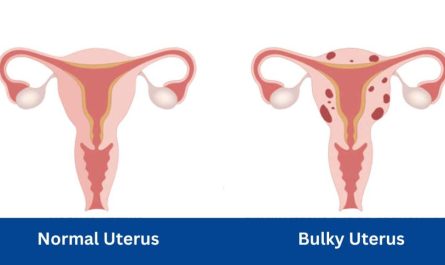
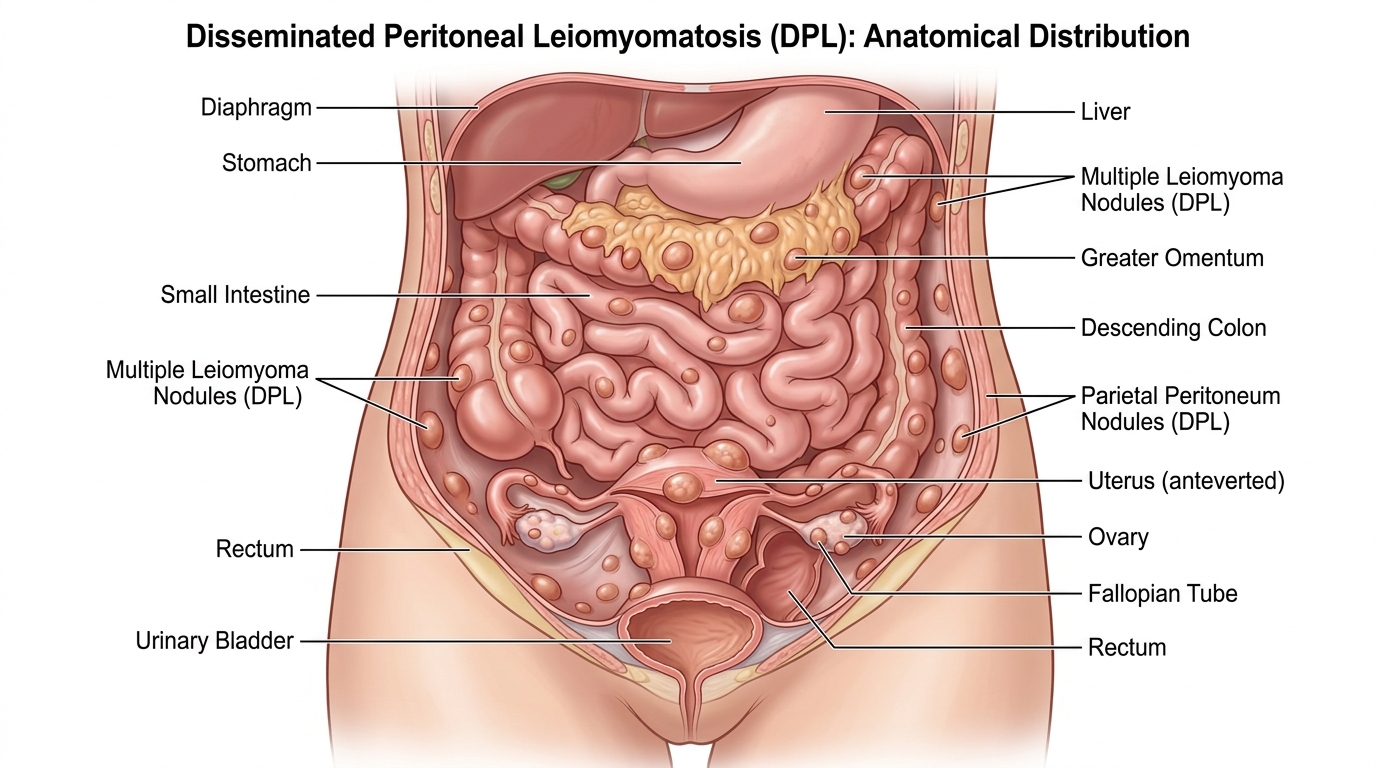
by Disseminated Peritoneal Leiomyomatosis (DPL) is an exceedingly rare, benign condition characterized by multiple smooth-muscle nodules scattered throughout the peritoneal cavity. First described by Willson and Peale in 1952, DPL mimics disseminated malignancy or peritoneal carcinomatosis on imaging, yet it remains histologically benign.
Etiology & Pathophysiology:
DPL is predominantly hormone-dependent. It is most frequently observed in reproductive-age women, especially those with a history of uterine fibroids, pregnancy, prolonged oral contraceptive use, or unopposed estrogen exposure. Iatrogenic DPL has also been reported following laparoscopic morcellation of uterine leiomyomas, where fragmented tissue implants and proliferates under hormonal influence.
Clinical Presentation:
Most patients are asymptomatic and DPL is discovered incidentally during surgery or imaging for other indications. When symptomatic, patients may present with abdominal distension, pelvic pain, pressure symptoms, or bowel and urinary complaints due to mass effect.
Diagnosis:
- Imaging: CT/MRI reveals multiple, well-circumscribed peritoneal nodules without ascites or lymphadenopathy. However, radiological differentiation from leiomyosarcoma or disseminated malignancy is challenging.
- Histopathology: The gold standard. Biopsy shows bland spindle cells arranged in fascicles, positive for smooth muscle actin, desmin, and estrogen/progesterone receptors, with low mitotic activity and absence of nuclear atypia.
- Laparoscopy/Robotic Exploration: Essential for both diagnosis and therapeutic planning. It allows direct visualization, targeted biopsy, and assessment of disease extent without the morbidity of laparotomy.
Management Guidelines:
Treatment is individualized. Asymptomatic, stable disease may be managed conservatively with hormonal suppression — GnRH agonists, aromatase inhibitors, or selective estrogen receptor modulators. For symptomatic or progressive disease, surgical cytoreduction is indicated. Given the extensive peritoneal spread, minimally invasive robotic surgery offers unparalleled precision for meticulous debulking while preserving fertility and minimizing adhesions.
Why Choose Dr. Amit Tandon for DPL Management?
Dr. Amit Tandon, M.S., DNB, FMAS, DMAS, is a pioneer in Robotic Gynecologic Surgery and one of North India’s most experienced surgeons for complex pelvic pathology.
- Unparalleled Robotic Expertise: Dr. Tandon established Agra’s First Dedicated Gynae Robotic Surgery Center and has performed 100+ successful robotic gynecologic surgeries within 9 months. His total surgical experience exceeds 30,000+ procedures across 25 years.
- Mastery in Complex Cytoreduction: DPL demands meticulous dissection of multiple peritoneal implants while avoiding bowel, bladder, and ureteric injury. The 3D-HD vision and EndoWrist® articulation of the da Vinci system, combined with Dr. Tandon’s expertise, enable complete debulking with minimal blood loss.
- Fertility-Preserving Philosophy: Since DPL affects women of reproductive age, Dr. Tandon prioritizes uterine and ovarian preservation whenever oncologically safe. His team provides integrated counseling with our IVF unit for patients desiring future fertility.
- Evidence-Based Practice: He follows ISGE and AAGL guidelines for laparoscopic management of rare peritoneal lesions and is a national faculty for robotic surgery training.
- Ethical & Transparent Care: DPL often causes cancer-related anxiety. Dr. Tandon ensures patients understand the benign nature of the disease, treatment rationale, and long-term surveillance plan.
Why Choose Dr. Kamlesh Tandon Hospital – IVF & Robotic Surgery Center?
- Agra’s First & Only Gynae Robotic Surgery Center
We operate the 4th-generation da Vinci Xi Robotic System — the same technology used at Mayo Clinic and AIIMS. This allows for 10x magnified 3D vision and sub-millimeter precision, critical for DPL cytoreduction. - 25 Years of Surgical Legacy + Next-Gen Technology
With 30,000+ successful surgeries, the hospital combines the clinical wisdom of Dr. Kamlesh Tandon with the advanced skills of Dr. Amit Tandon and Dr. Vaishali Tandon. - Multidisciplinary Tumor Board Approach
Every DPL case is reviewed by our team of gynecologic oncologists, radiologists, and pathologists to rule out leiomyosarcoma and finalize the safest surgical strategy. - Integrated Women’s Health Ecosystem
- Robotic & 3D Laparoscopic Surgery: For complex myomas, endometriosis, and DPL.
- IVF & Fertility Preservation: On-site ART lab with RI Witness system for patients requiring post-DPL fertility care.
- Patient Safety: NABH-standard modular OTs, Level-III ICU, and 24×7 anesthesia coverage. Our robotic surgery complication rate is <1%.
- Cashless & Transparent Billing: Empanelled with all major TPAs. No hidden costs.
- Documented Outcomes
- 100+ Robotic Surgeries in 9 Months with zero conversions to open surgery.
- Fast Recovery: Most DPL patients discharged in 48 hours, resuming normal activity in 7–10 days vs. 4–6 weeks after open surgery.
The DPL Treatment Pathway at Our Center
- Accurate Diagnosis: Contrast MRI + CT review followed by robotic diagnostic laparoscopy and frozen-section biopsy.
- Robotic Cytoreduction: Complete excision of all visible nodules using Firefly™ fluorescence to differentiate vascular planes.
- Hormonal Suppression: Post-op GnRH analogue therapy for 6 months to prevent recurrence, with BMD monitoring.
- Surveillance: Annual MRI + clinical review for 5 years. Recurrence risk is <10% after complete debulking + hormonal therapy.
Conclusion: Rare Disease, Renowned Expertise
Disseminated Peritoneal Leiomyomatosis is rare, but it does not have to be frightening. With correct diagnosis and robotic precision, DPL is entirely manageable. At Dr. Kamlesh Tandon Hospital, under Dr. Amit Tandon’s leadership, you receive world-class robotic surgery backed by 25 years of trust.
If you have been diagnosed with multiple pelvic tumors or DPL, seek a second opinion before opting for open surgery. Minimally invasive excellence is available in Agra.
Schedule a Consultation
📍 Dr. Kamlesh Tandon Hospital – IVF & Robotic Surgery Center
4/48-B, Lajpat Kunj, Agra
📞 0562-2525369 | 7078432277
Experience. Expertise. Excellence.
Medical References:
- Willson JR, Peale AR. Multiple peritoneal leiomyomas associated with a granulosa-cell tumor. Am J Obstet Gynecol. 1952.
- Al-Talib A, Tulandi T. Pathophysiology and possible iatrogenic cause of DPL. Gynecol Obstet Invest. 2010.
- Nguyen L, et al. Robotic management of disseminated peritoneal leiomyomatosis. J Minim Invasive Gynecol. 2016.
- AAGL Practice Guidelines: Management of Benign Disseminated Peritoneal Disease. 2021.